The “Meat Layer” Isn’t a Bug in Automation. It’s the Feature.
The “Meat Layer” Isn’t a Bug in Automation. It’s the Feature.
Hot take:
Robots don’t replace humans.
They train on them.
For all the talk about full autonomy, the reality inside warehouses, hospitals, factories, and field ops looks different.
The systems that scale fastest aren’t the ones trying to remove people first.
They’re the ones learning from them.
Robots Don’t Fail in Demos.
They Fail in Reality.
In controlled environments, autonomy looks incredible.
Clean floors.
Standardized objects.
Predictable behavior.
But production environments aren’t clean.
Pallets are damaged.
Labels are half torn.
Aisles are blocked.
Lighting changes by the hour.
People take shortcuts.
Reality is messy.
Humans are good at messy.
Robots need messy to learn.
The Most Underrated Sensor Platform in Robotics?
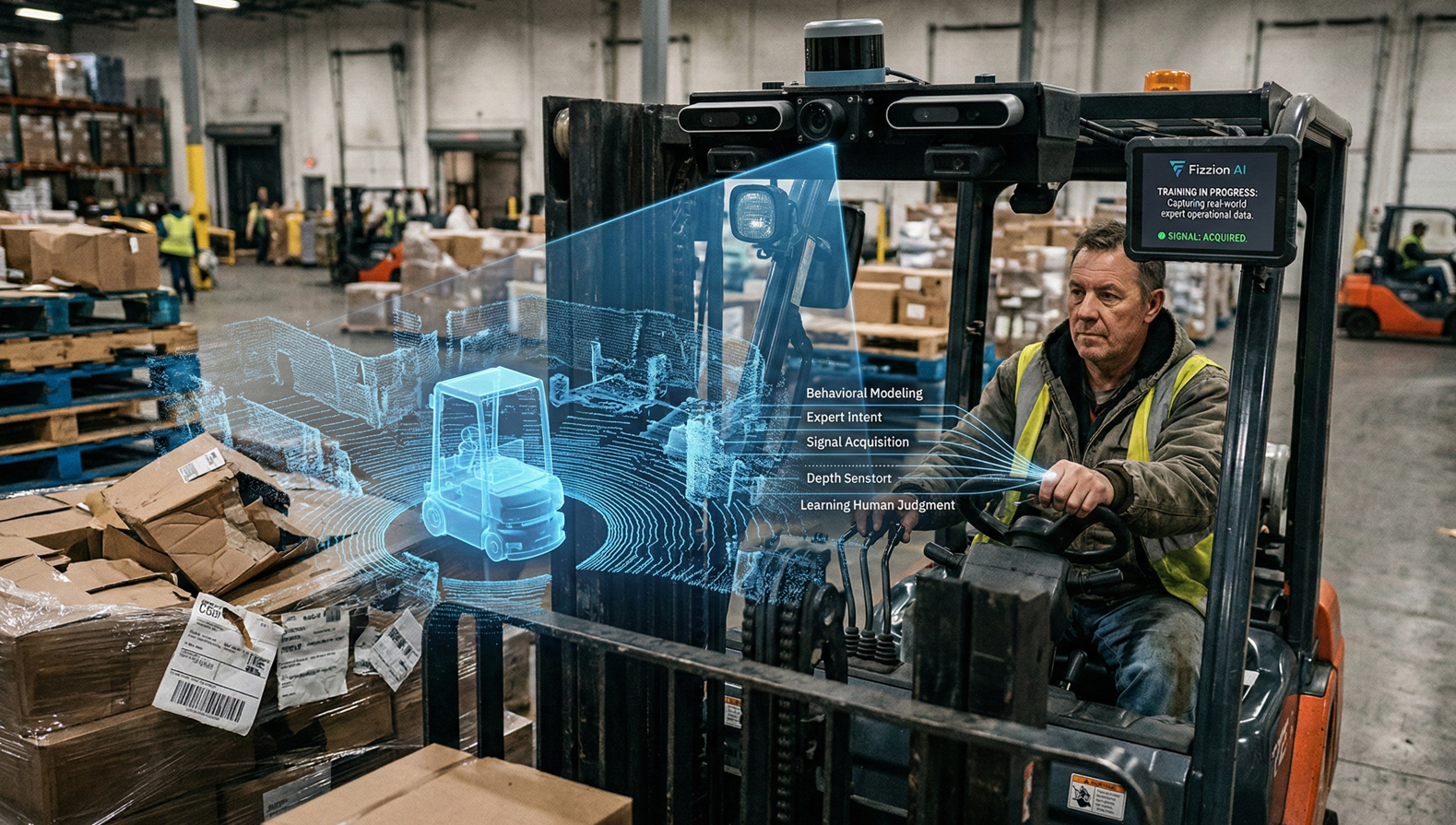
Human-operated machinery.
Forklifts.
Tuggers.
Medical carts.
Ground vehicles.
Industrial equipment.
These machines already move through the environments robots are trying to master. When instrumented properly — cameras, LiDAR, depth, telemetry — they become rolling data collection systems.
Not staged data.
Not simulated data.
Operational data.
They capture:
• What objects actually look like when they’re imperfect
• How experts navigate ambiguity
• How humans adjust to edge cases
• What “safe” behavior looks like in context
This is the long-tail data autonomy systems struggle to get.
Simulation Smooths the World.
Humans Don’t.
Simulation is powerful. It speeds development. It enables safe testing.
But it smooths the edges.
It rarely captures:
Subtle visual noise
Degraded infrastructure
Behavioral unpredictability
Rare, high-impact events
The “meat layer” encounters these conditions daily.
If you want robots that work in the real world, you have to train on the real world.
And the real world currently runs on humans.
Human Behavior Is Ground Truth
Here’s what often gets missed:
Humans don’t just provide environmental data. They provide intent.
When an experienced operator slows down before a blind corner…
When they give extra clearance to a pedestrian…
When they re-approach a load instead of forcing it…
That’s encoded judgment.
That is training signal.
Through imitation learning and behavioral modeling, robotics systems can absorb decades of operational expertise — if the data is captured correctly.
Automation isn’t elimination.
It’s encoding.
The Companies That Understand This Will Win
The edge in robotics won’t just come from better models or cheaper hardware.
It will come from better data.
Specifically:
Continuous, high-quality, human-derived operational data.
Companies that treat human-operated machinery as distributed sensor networks will:
• Improve reliability faster
• Reduce edge-case failures
• Shorten deployment timelines
• Increase safety in mixed environments
The “meat layer” becomes a strategic advantage.
A moat.
The Future Is Not Human vs. Robot
It’s Human → Robot.
Humans as teachers.
Humans as validation layers.
Humans as the source of long-tail learning.
Even deployed autonomous systems still depend on updated data as environments evolve.
Layouts change.
Workflows shift.
New materials enter the system.
Without human-derived data, robots plateau.
With it, they improve.
Automation doesn’t remove the meat layer.
It builds on it.
And the companies that recognize that will build robotics systems that actually scale.
If this resonates, I’d love to connect with others thinking about:
Imitation learning at scale
Operational data pipelines
Human-in-the-loop autonomy
Real-world robotics deployment challenges
The next breakthroughs won’t come from pretending humans aren’t part of the system.
They’ll come from learning from them.
Did you enjoy this article?